Protecting Food From Cross-Contact
On This Page

July 22, 20268 min read
Cross-contact contamination is related to food allergens, particularly when they come in direct or indirect contact with an allergen-free food. It is prevented by proper allergen management during food production. Appropriate labelling of allergens on packaged and unpackaged foods is another important step in protecting food from cross-contact contamination.
Protecting Food from Cross-Contact Contamination
Food is protected from cross-contact contamination by proper allergen management during food processing and packaging. Allergen control methods include the following.
Clear Labelling of Food Allergens
Allergen labelling for different types of food must be provided to the customers. Standard rules indicate clear identification of allergens on pre-packed and unpacked foods. Food businesses and caterers must inform the consumer about any potential allergen present in the food they provide.
For more information, visit our blog article The HACCP System: Process and Principles
Separate Storage of Allergenic Food
Food containing any one of the 14 allergens must be stored or kept separate from non-allergenic food, in different areas or compartments. This will prevent accidental allergenic cross-contact contamination. It is recommended to discard food if cross-contact contamination has been suspected.
Maintenance of Staff and Equipment Hygiene
It is important for food-handlers to follow strict hygiene practices to prevent transfer of allergenic proteins to non-allergenic food. For this purpose, their work uniform must be clean. They should frequently wash their hands with soap after handling a particular type of food.
Equipment involved in food preparation must be cleaned with a safe detergent and sufficient quantities of water. The equipment must be washed after each use.
Colour-Coded System for Utensils
For handling different food types, utensils can be marked with different colours. Knives, chopping boards and plates for allergenic food types can be assigned red colour while those for non-allergenic food types can be assigned green colour. Using separate utensils for handling allergenic and non-allergenic food reduces the risk of cross-contact contamination.
Cross-Contact Food Allergy
Cross-contact is caused by allergenic contamination of food.
Allergens in food trigger an anaphylactic reaction in immunity-compromised persons. They require immediate clinical care and treatment.
Food allergens are antigens or protein substances that enter the human body. They are harmless for most but dangerous for some people, depending on the sensitivity of their immune systems. Entry of a small allergenic protein turns non-hazardous food into hazardous one.
Sources of Cross-Contact Contamination
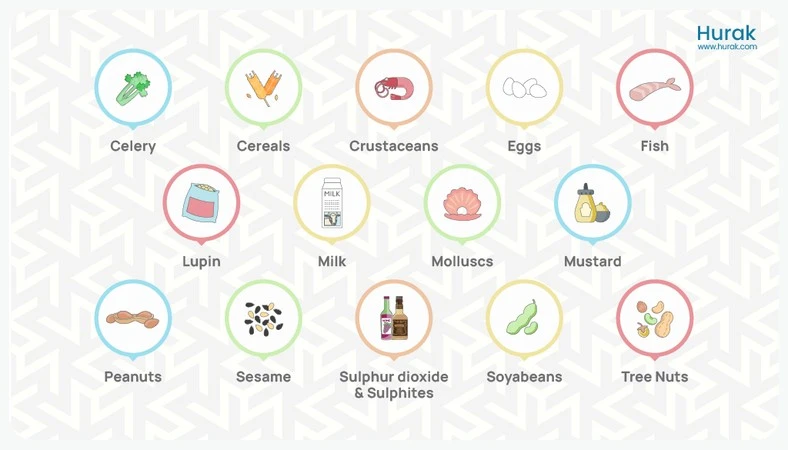
According to the Food Standards Agency, the 14 food allergens are:
celery
cereals containing gluten (such as wheat, barley and oats)
crustaceans (such as prawns, crabs and lobsters)
eggs
fish
lupin
milk
molluscs (such as mussels and oysters)
mustard
peanuts
sesame
Soybeans
sulphur dioxide and sulphites
tree nuts (such as almonds, hazelnuts, walnuts, brazil nuts, cashews, pecans, pistachios and macadamia nuts).
Difference between Cross-Contact Contamination and Cross-Contamination
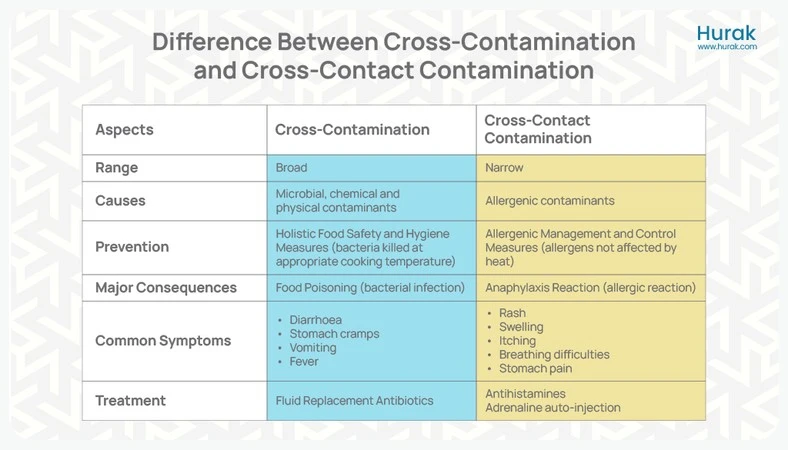
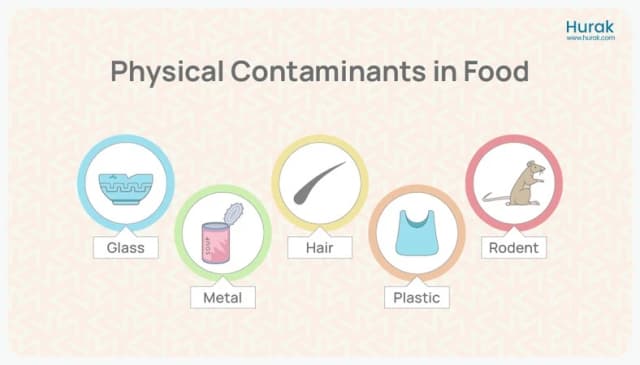
The terms cross-contact contamination and cross-contamination cannot be used interchangeably as they have key differences in meaning. Cross-contamination is a broad term which refers to contamination of food by physical, microbial and chemical pollutants. On the other hand, cross-contact contamination specifically deals with allergenic contamination of food.
Cross-contamination requires holistic implementation of food safety and hygiene measures targeting physical, chemical and microbial pollutants. Cross-contact contamination prevention requires only allergenic contamination control. A natural reaction of cross-contamination is food poisoning, whereas, cross-contact contamination can lead to anaphylaxis.
One major difference is that while cross-contaminated food can become safe by killing bacteria at appropriate cooking temperatures, allergens are not affected by heat at any temperature. Food containing allergens remains unsafe for consumption for people who are allergic to them.
Common Examples of Cross-Contact Contamination in Food
Cross-contact contamination occurs mostly due to negligence on the part of food handlers and labellers at any stage of the food preparation process. Common everyday example includes:
Improper labelling of chocolate containing peanuts
Cooking vegetables in fried fish oil and served
Bread sliced using an unwashed knife previously used to handle boiled eggs
Ketchup sauce was replaced with mustard in sandwiches without informing the customer
Consequences of Cross-Contact Contamination in Food: Anaphylaxis
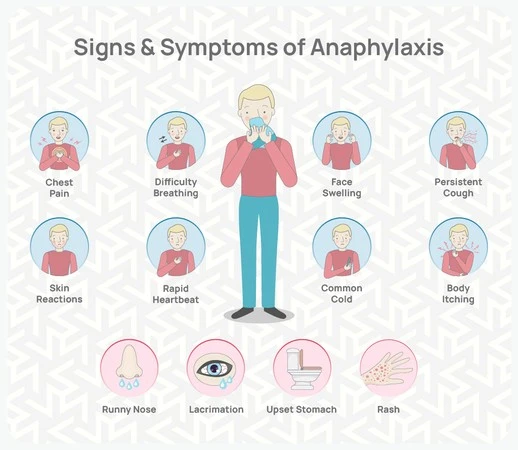
A small quantity of an allergen can lead to a life-threatening situation where the person may face breathing difficulties, if not addressed promptly. Once cross-contact contaminated food is eaten, a rash appears. This is followed by a more serious anaphylactic reaction. Cross-contact is lethal for hypersensitive people who are allergic to particular kinds of food.
Conclusion
Allergenic contamination of food is the main source of cross-contact contamination. Knowledge about the official 14 food allergens and their management is important for food handlers and labellers. This is to prevent cross-contact contamination of food. There are numerous differences between cross-contamination and cross-contact contamination in terms of causes and preventive measures. Cross-contact contamination results in an allergic reaction and is solely concerned with food allergy.
Related articles


Explore more from Hurak
Courses
Upskill with job-ready training.
Mock Tests
Measure your learning progress.

Teach the World Online
Create an online video course, reach students across the globe and earn money