Lone Working Safety Explained: Risk Assessment, Policy Requirements Practical Solutions
On This Page

July 16, 202614 min read

A lone worker might be a delivery driver starting a late-night route, a care worker visiting a service user at home, or a security guard patrolling an empty building. Although these roles seem routine, the reality is that working alone significantly increases exposure to risks such as violence, medical emergencies, slips and falls, or delays in rescue because help is not immediately available.
Lone working is common across many industries, yet it requires careful management and a structured safety approach. Employers have a legal and moral responsibility to protect workers who operate without direct supervision, ensuring risks are assessed, control measures are in place, and clear procedures are followed.
This guide explains what lone working means, who it applies to, key hazards, how to carry out a lone working risk assessment, what a lone working policy should include, and which laws regulate lone working. You will also find practical examples and best-practice guidance to help you keep lone workers safe.
What Is Lone Working?
Lone working refers to any work activity where an employee performs duties without close or direct supervision, or in a location where no other team members are present. Lone workers may be completely isolated from others, working remotely, working alone in a building, or travelling between sites.
Common situations where lone working occurs:
Working in a remote location or off-site location
Working outside regular business hours
Travelling alone for work purposes
Working alone within a workplace, such as a night shift or a single-person site
Mobile roles where workers move between environments
Lone working applies to full-time, part-time, temporary, contractor, and volunteer staff. Regardless of employment type, employers must ensure that employees are safe, competent, trained, and adequately supported.
Who Is Considered a Lone Worker?
A lone worker is anyone who carries out their job without direct supervision or immediate support from colleagues. This can include working at a fixed location, such as a shop or site office; travelling between locations; visiting clients in their homes; or working remotely outside regular business hours.
Lone working is one of a wide range of professions in which individuals work independently. The profession of lone working is not restricted to one area. For example, home support workers and social care workers frequently operate independently within individuals' homes, as do security officers and night shift employees, who are responsible for providing a safe and secure environment on the premises where they work. Delivery drivers, postal workers, and couriers are often required to perform their work while moving from place to place.
In contrast, construction workers may complete their work on-site, either alone or with minimal assistance. Retail employees and store operators may work alone in their shops. In contrast, cleaners and facility staff typically perform cleaning and other routine maintenance outside the time frames during which the company operates or has customers present. Other examples of lone working include utility workers, field techs, settlement agents, and rental property inspectors.
Industries with the most exposure to lone working situations include healthcare, emergency services, transport, construction, retail, property services and field-based engineering roles, where job duties regularly require independent decision-making without immediate backup.
Why Lone Working Safety Matters
Lone workers face a unique combination of risks. Without others present, a minor incident can quickly escalate into a serious emergency. Workers may experience increased exposure to workplace violence, accidents, sudden illness, isolation or mental stress.
When a worker is alone, the ability to call for help, receive immediate first aid, or escape a dangerous situation may be limited. Employers have a legal duty of care to ensure safe working environments, identify foreseeable risks, and put in place proportionate controls.
Effective lone worker safety protects employees, reduces business disruption, meets regulatory expectations and strengthens workplace culture.
How Many Lone Workers Are Attacked Every Day?
Multiple sources suggest the risk to lone workers is significant and rising. A UK-based estimate puts the figure at about 150 lone workers attacked daily (physical or verbal), equating to approximately 54,750 attacks per year.
A 2025 report by SoloProtect revealed a concerning trend: physical attacks on lone workers have surged by 132% over the last three years, while weapon-related incidents have also increased sharply.
Wider workplace data from HSE, which includes lone working among other work-related settings, recorded around 689,000 workplace violence incidents in 2024/25 across England and Wales.
Additionally, a survey of lone workers by EcoOnline in 2025 found that nearly half (46%) reported a rise in violence or aggression in their workplace over the past 2–3 years.
These figures reinforce the need for structured risk assessments, robust safety policies, training, and real-time monitoring to protect lone workers.
Roles and Responsibilities (Employers, Managers & Lone Workers)
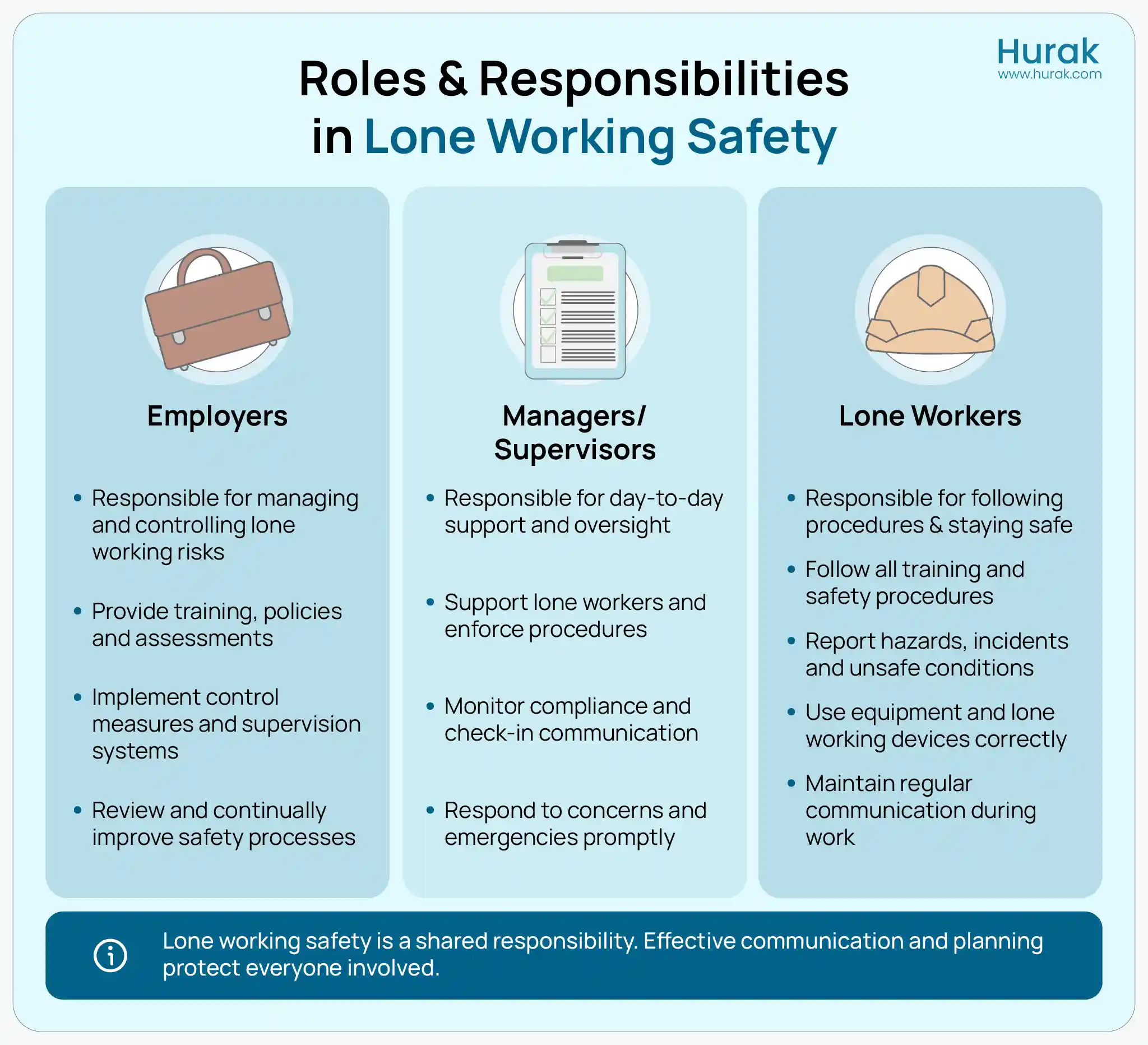
Effective lone working safety depends on shared roles and responsibilities across the organisation. Each group plays a critical role in preventing incidents and responding quickly when risks arise.
Employers
Conducting risk assessments: Identify and evaluate hazards, assess risks and implement proper controls for lone working.
Providing Training, Policies, and Equipment: Ensure workers are trained in procedures for working alone and have the appropriate equipment to remain safe while working alone.
Supervising and Monitoring Processes: Setting up processes for monitoring lone worker activity and developing appropriate measures to assist workers in the event of a problem.
Regularly Review Safety Arrangements: Continuously improve arrangements in response to incidents or operational changes, evaluate control measures after an incident, and document adjustments made.
Managers / Supervisors
Support lone workers in day-to-day operations, offer guidance and ensure procedures are followed.
Monitor communication and welfare system, check-in schedules, GPS tracking or buddy systems.
Respond quickly to concerns and emergencies, verify worker status and activate emergency protocols when required.
Lone Workers
Follow all lone working procedures and training provided, including safe systems of work and emergency instructions.
Use equipment and safety technology correctly, e.g., alarms, devices, PPE and monitoring tools.
Report hazards, incidents, or unsafe situations to enable improvements and prevent future harm.
Maintain regular communication while working alone, especially when conditions change or risks increase.
Lone working safety is most effective when every party understands and fulfils their responsibilities. Clear communication, ongoing monitoring, and a proactive safety culture help reduce risks and protect workers across all environments.
Legal Requirements: Which Laws Regulate Lone Working?
Most countries require employers to protect employees from foreseeable risks, including situations where work is carried out alone. Although specific legislation differs across regions, the core legal principle of the duty of care remains consistent worldwide. Employers must ensure that lone workers are not exposed to greater risk than those working alongside colleagues and that suitable precautions, training and supervision are provided.
Legal requirements typically fall under general workplace health and safety laws that mandate employers to assess risks, implement control measures and review them regularly. Many regulatory frameworks also include expectations around violence prevention, welfare provision and emergency planning, especially where workers deal with the public or operate in high-risk environments. Employers are also legally required in many jurisdictions to provide appropriate training, equipment, communication systems and safe working procedures.
Common Hazards and Risks of Lone Working
Lone workers can face a diverse range of hazards depending on their work environment, tasks performed, location, public interaction, access to emergency support and the time of day they operate. Without colleagues nearby, even minor incidents can escalate into serious consequences, making it essential to recognise and manage the risks of working alone.
Physical Hazards: One of the most common types of hazards faced by workers in solitary jobs is physical hazards. When performing activities such as operating machines or using other equipment without a supervisor present, workers are at increased risk of injury or accidents. Similarly, the risk of sustained injuries and being involved in accidents from slips, trips and falls is increased in outdoor or poorly lit locations, as well as when the job includes working at height, performing manual handling or dealing with dangerous materials, since there is no one to assist them or to alert others if they were to become injured during an emergency.
Violence and Aggression: Workers who regularly interface with the public or enter new surroundings are at an increased risk of being verbally or physically assaulted. The level of risk is generally higher for jobs that involve frequent customer-related conflicts, require a supervisor to respond to emergencies, and include workers who handle cash or work in isolated retail settings. Additionally, workers who perform home visits as part of their duties, such as social workers, emergency responders, or law enforcement officers, face an increased risk to their personal safety when interacting alone with unexpected individuals or situations.
Health and Medical Emergencies: Lone workers may experience sudden illness, fatigue, stress or medical complications without anyone nearby to provide immediate help. Conditions such as asthma attacks, cardiac issues or injury from strain can become life-threatening if there is no way to quickly call for assistance. Mental health concerns, including anxiety and work-related stress, are also more common when employees feel isolated or unsupported.
Environmental and Location-Based Risks: Some lone workers operate in remote, poorly lit or hard-to-access locations where communication and visibility are limited. In such environments, unreliable mobile signal, extreme weather, hazardous terrain, restricted access and long response times can dramatically increase the severity of incidents. Working outdoors, at height, offshore or during night hours also introduces unpredictable environmental hazards.
These risks demonstrate why lone working requires comprehensive planning, realistic safety controls, reliable communication systems and appropriate protective equipment. Proactively identifying hazards and implementing structured risk management measures is essential for maintaining safety wherever employees work independently.
Lone Working Risk Assessment (What It Is and Why It’s Important)
A lone working risk assessment is a structured process used to identify hazards associated with lone working and determine the steps required to minimise them. It evaluates who may be harmed and the seriousness of the consequences.
Employers must carry out a risk assessment whenever workers operate alone, ensuring it is documented, communicated and regularly reviewed. It is a legal requirement in many regions and a critical tool for preventing injury.
How to Conduct a Lone Working Risk Assessment (Step-by-Step)
1. Identify hazards: Assess the tasks involved, environment, equipment and behaviours that could cause harm.
2. Determine who may be harmed and how: Consider employees, contractors, visitors and members of the public.
3. Evaluate risk severity and likelihood: Decide whether the current level of risk is acceptable or further controls are required.
4. Implement control measures: Introduce training, procedures, buddy systems, supervision, communication tools or technology.
5. Record findings and create an action plan: Keep clear documentation that can be reviewed and updated.
6. Communicate outcomes: Ensure workers understand procedures and expectations.
7. Monitor and review regularly: Update after incidents, near misses, role changes or new hazards.
Lone Working Risk Assessment Example (Format Guide)
A typical lone working risk assessment may include:
Section | Details |
Task/Activity | Example: Home visit to client’s property |
Location | Residential area, evening |
Identified hazards | violence, unfamiliar environment, slips |
People at Risk | Lone worker, public |
Existing Controls | Training, visit scheduling, and check-in system |
Additional Controls Needed | Lone worker alarm device, risk rating review |
Residual Risk | Low / Medium / High |
Review Date | Set period or event-based |
This structure helps employers document decisions and demonstrate compliance.
Control Measures, Monitoring and Supervision
Effective control measures are essential to protect lone workers and ensure that risks remain manageable during isolated work activities. Organisations should implement clear lone working procedures and safe working methods, supported by structured check-in and check-out systems, planned communication schedules, and escalation processes such as buddy systems.
Real-time monitoring tools, safe visit protocols and accurate location information also help ensure that workers can be quickly reached if assistance is required. Additionally, high-risk tasks should be limited or prohibited when supervision is not available. Strong monitoring and supervision practices provide managers with the ability to respond rapidly to incidents and prevent minor concerns from becoming serious emergencies.

Lone Working Solutions and Safety Technology
Technology plays a vital role in enhancing the safety and communication support available to lone workers. Organisations can choose from a wide range of digital solutions, including lone worker mobile apps, GPS-enabled tracking devices, wearable man-down detection sensors, and satellite communication tools designed for remote or no-signal environments. Many devices offer panic alarms, SOS alerts and automated time-based check-ins to activate emergency responses if a worker is unresponsive.
Selecting the most appropriate solution depends on factors such as job type, location, risk level, and available connectivity. When integrated with strong organisational procedures, safety technology greatly improves response times and increases overall protection for lone workers.
Lone Working Policy: What Should It Include?
A lone working policy is an essential organisational document explaining how the business manages lone worker safety. It sets expectations for both employers and employees.
A strong lone working policy should include:
Purpose and scope
Roles and responsibilities
Lone working risk assessment requirements
Control measures to reduce risk
Incident reporting and emergency response procedure
Monitoring and supervision arrangements
Use of equipment, technology and PPE
Training and communication processes
Policy review timeline and compliance expectations
A clear policy improves consistency, awareness and operational safety.
Training Requirements for Lone Workers
Training is essential to ensure lone workers understand how to keep themselves safe, recognise risks and respond effectively to emergencies. Practical training should cover personal safety awareness and conflict management, helping employees develop confidence when dealing with complex or unpredictable situations. It should also include hazard recognition and dynamic risk assessment skills, enabling lone workers to evaluate changing conditions and make safe decisions on the spot.
Emergency response procedures, such as incident reporting, escalation steps, and communication protocols, must be clearly understood, along with guidance on using lone worker safety devices or monitoring technology. Training must also reflect organisation-specific procedures, including check-in systems, workplace protocols and equipment handling. Regular refresher training is strongly recommended to maintain competence, especially when job roles, equipment or organisational processes change.

Emergency Response & Incident Reporting
An effective emergency response plan helps workers know what to do if something goes wrong.
Steps should include:
Assess the situation and attempt contact
Escalate to emergency services if required
Follow internal incident escalation procedures
Record details and conduct post-incident review
Support affected employees
Learning from incidents helps improve safety performance.
Industry-Specific Lone Working Scenarios
Healthcare & Social Care: Home visits and patient interactions can involve unpredictable behaviour and unfamiliar environments.
Security & Night Workers: Working alone in isolated buildings increases risks from intrusion or confrontation.
Delivery & Driving Roles: Remote locations, road accidents and working in public spaces increase risk.
Construction & Maintenance: Working at height, near machinery or in hazardous environments requires strong risk management.
Retail & Customer-Facing Roles: Handling cash increases robbery risk, especially during late hours.
Cleaning & Facilities: Working alone in large or complex buildings increases isolation risk.
Real-World Examples and Case Studies
Real incidents clearly demonstrate why robust lone working procedures, training and monitoring systems are essential. For example, a lone healthcare worker known as “Anna” suffered a medical emergency while working alone in 2025. She activated an SOS alert on her personal safety device, enabling monitoring staff to locate her immediately and dispatch emergency support, an action credited with saving her life. In another case, a manufacturing employee working alone during a night shift suffered an industrial accident while handling chemicals. A personal alarm system triggered an automatic alert, allowing supervisors to respond quickly and provide first aid until paramedics arrived.
Data also highlights the rising risk landscape: a 2024 report by Solo Protect revealed a 132% increase in physical attacks, and over 10% of workplace fatalities involve lone workers. These real examples show that without communication and monitoring systems, outcomes could have been far more severe, reinforcing the need for proactive safety planning, technology solutions and effective lone worker training.
Final Thoughts
Lone working is an essential part of many industries, but it must be managed carefully. By assessing risks, developing strong policies, using effective technology and providing appropriate training, employers can improve safety and support lone workers to perform their roles confidently and securely.
Frequently Asked Questions (FAQs)
Is it legal to work alone?
Yes, but only if risks have been properly assessed and safe systems are in place.
Who is responsible for a lone worker?
Employers hold the primary responsibility, supported by managers and workers themselves.
How often should risk assessments be reviewed?
After any incident, role change or significant environment change, or at scheduled intervals.
What should a lone worker carry with them?
Communication device, ID, emergency contact information, PPE and any required tools or alarms.
Can lone workers work at night?
Yes, but additional controls and monitoring may be required.
Related articles


5 Best Frontline Operations Software for Managing Tasks and Employee Performance



Understanding Hazards in the Workplace: Types, Examples, and Control Measures

Explore more from Hurak
Courses
Upskill with job-ready training.
Mock Tests
Measure your learning progress.
Teach the World Online
Create an online video course, reach students across the globe and earn money